Saturday, 1 March 2014

Review: Hiromi - Time Control

If you’ve been following Hiromi’s career up until this point, especially chronologically, then ‘Time Control’ - her forth - will come as no surprise. With each release featuring more adept electronic work, here she acquires a full-time guitarist in the form of David Fiuczynski and in doing so becomes the leader of a band that in set-up (and occasionally sound) will draw many comparisons with ‘Return To Forever’.

Curiously though, despite the addition of an electric guitarist, Hiromi almost entirely restricts herself to the acoustic piano. The effect of this though is spellbinding, with Hiromi’s classical training and the guitar-piano interplay taking on an impressive velocity and blend. Album opener ‘Time Difference’ showcases some excellent solo work and highlights just how well the band meshes, with Fiuczynski’s guitar throwing in some considerable punch. The call-and-response at the halfway mark is worth the price of entrance alone.

‘Time Out’, the second track, takes on a more swaggering blues persona, while bizarrely ‘Deep Into The Night’ two numbers later sounds at times, with its angular guitar and tinkling piano mix, uncannily like David Bowie’s classic album ‘Diamond Dogs’.

The highlight appears at the half-way point in ‘Real Clock vs. Body Clock = Jet Lag’, where the entire band synch together sublimely to play what sounds like a forgotten 60s jazz spy-theme. With its twanging guitar and running rhythm, it’s a wonder why no-one has yet attempted to poach this for sampling or remixing (at least at the time of writing this). Elsewhere, ‘Time And Space’ offers a slower and more spacious sound, with a great solo by Hiromi, and ‘Time Control, Or Controlled By Time’ that follows it sounds just like you imagine ‘Return To Forever’ would sound if they did record a new album today, albeit in a different dimension.

All of the band are on fine form here. Fiuczynski, on fretted and fretless guitars, is given the rock-start treatment, and thrives on it. And with his superb chops, his presence greatly helps the bandleader in achieving the fusion sound she is clearly aiming for. Martin Valihora again provides the solid and strong rhythm we’ve come to expect, and Tony Grey gives us his best performance yet, ably switching smoothly between soulful and moving to full-on rock attack in the space of a single bar.

Here and there, you can feel the influences of her three biggest mentors, Oscar, Chick and Ahmad, emerging - but where Hiromi truly succeeds is melding all of these very different influences into something her own. At times melodic, quirky and complex, Hiromi’s music possess a certain edge that won’t be for everyone, but this is music as it should be – with the freedom to both explore and express without restriction on length or sound or having to play to a demographic. The addition of electric guitar to the stellar trio may not be to all tastes, but Hiromi Uehara has rapidly become known as an important artist who will contribute no small changes to the music of jazz and jazz fusion. And ‘Time Control’ is another great entry in an already enviably strong catalogue.

****

Review: Hank Mobley - Thinking Of Home

‘Thinking Of Home’, after more than twenty albums as bandleader, was Hank Mobley’s final session with Blue Note. Recorded in 1970, it would go unreleased until a decade later, and he would record only one more ever album in 1972, before completely disappearing from the jazz world.

With Mobley for his label farewell is the excellent trumpeter Woody Shaw, who gets to show some good solo fire alongside longtime Mobley sideman Cedar Walton, and largely unknown guitarist Eddie Diehl. Both men get good spots, but this is firmly the Mobley/Shaw show. Mickey Bass and Lex Humphries are also present to provide a solid yet largely noteless no-frills rhythm.

A three-part suite opens, showing a rare long-form composition from Mobley. It’s a good start if sometimes a little flat, before ‘Justine’ creeps in. An open and contemplative piece, it lasts for thirteen minutes and features some solid solos from everyone except ironically Mobley, but overall it runs out of steam long before it comes to an end, and ultimately drags its heels to the finish. ‘You Gotta Hit It’ elevates things with a nice stomping hard bop and signals a strong second half to the session where everyone sounds a bit more relaxed, including the one boogaloo piece here ‘Talk About Gittin’ It’.

‘Thinking Of Home’ is a somewhat surprising later Mobley recording. There’s no obvious commercial drive or over-arching formula here, but instead a lot of modal ideas. But, while refreshing from the glut of his other later work, it sounds mostly limited and awkward. Most importantly and sadly though, Mobley sounds decidedly ‘off’ throughout. His tone, that was bright and full of life during his time with Art Blakey and on his own prime Blue Note early sixties work, is here grey and lifeless. And as a player too he heartbreakingly sounds very tired and burned out (he even looks knackered on the album cover photo).

This isn’t a recommendable piece of Mobleys history. There are much stronger points for newcomers and for anyone who wants to delve deeper beyond his handful of classics and excellent albums, there are better destinations. It has it’s moments but, with the overall feeling being one of sadness at how good he used to sound, only Mobley die-hards, (of whom I count myself), will truly want this one.

**

Review: Donald Byrd - Love Byrd

‘Love Byrd’, or to give it its full title, ‘The Point Where It All Went Downhill For Donald Byrd’. Leaving Blue Note after some twenty years and signing with the Elektra label signalled the end of a very fruitful and successful series of collaborations between trumpeter Byrd and the skilled production team of ‘The Mizell Brothers’. A critically knocked period, with Byrd being branded as a traitor, the trumpeter in actuality had fully and perfectly realized his own vision of being able to play music he enjoyed, whilst also becoming a more accessible and commercially successful artist. His records of course sold by the crate-load too.

The move to Elektra though was the beginning of the wheels coming off. Sounding for the most part horrifically like very dated disco, replete with cheesy handclaps, ‘Love Byrd’ is upsetting for fans of both Byrds hard-bop and funk work. Worse still is the very (very) slick nature of the album. There’s zero grit here and not much in the way of substance, with just a smoothed and sanded-down polish on top of the largely uninteresting arrangements. And who’s to blame for this? None other, rather oddly and surprisingly, than soul and funk main-man Isaac Hayes.

More bizarrely, it’s Hayes, and not Byrd, who dominates the session here. His Hot Buttered Soul quartet handles vocal duties, while he himself plays acoustic and electric piano, as well as vibraphone. Additionally he provides and arranges most of the material too. In fact, there’s not a lot that Byrd does here at all to justify his name being above the album title. For the most part, he simply plays along with some of Hayes arrangements and fills in here-and-there; his few solos are also depressingly short in both length and number. If asked on a blind listening who you thought this recording was by, you’d struggle and pick any number of disco or funk-lite bands of the era before getting even anywhere close.

The up-tempo pieces are uniformly and shockingly weak and flat, adding nothing, and are instantly forgettable. On the flipside, there are some good, if a little too thickly-polished, ballads here. Byrds own ‘I’ll Always Love You’ is one of the strongest moments, and Andrew Walker’s ‘Butterfly’ is simply beautiful and unarguably the albums best. Crucially it’s also one of the few tracks to have Byrd actually do something with his trumpet.

Marking the clear start of a period of mostly lacklustre recordings, Byrds winning funk days are clearly over, and sometime later he would eventually return to hard-bop and in fact record some very worthwhile sessions. This however, though not terrible, remains an oddity in a mostly strong discography, and even Byrd die-hards may want to shun it, featuring as it does almost none of its headlining act. Bland, flavourless and without clear focus, ‘Love Byrd’ is strictly for those who have almost every Donald Byrd album and just simply can’t afford to bear any empty spaces in their otherwise complete collection.

**

Review: Freddie Hubbard - Without A Song: Live In Europe

Not that Freddie Hubbards death created a new sudden desire for unissued and locked-in-the-vault material, but it certainly did fire the many labels he had recorded for to leap into very quick action. And with his existing live recorded output woefully thin on the ground, and variable in quality, ‘Without A Song: Live In Europe’ is justifiably one of the most anticipated of his post-humous releases. Recorded from 1969 in three different venues from London, Bristol and some unspecified location in Germany, the trumpeter was actually involved in the processes for its release too. Excited about the album and other similar archival finds, it really is a great shame that he didn’t live to see this release in all its glory.

A strong live band is formed around the rhythm of bassist Ron Carter and drummer Louis Hayes, with Roland Hanna lending his skills on piano, and interestingly no second horn, allowing Hubbard full reign to solo as he pleases, with his signature sound showcased immediately from the start. The mood throughout is notably buoyant and joyful and sounding like everyone is fully enjoying themselves, with just ‘The Things We Did Last Summer’ dipping into more melancholic ballad fare, but still sounding beautiful – just like the other ballad here, ‘Body & Soul’, which in fact is the only piece to have appeared elsewhere in the Hubbard discography, with everything else here tantalisingly receiving its very first release.

It’s very close to being consistently all good too, from the slower ballads to the energetic classic of ‘A Night In Tunisia’, with Hubbard simmering all over the set. There’s some raw aggression here too, but being Hubbard of course, it’s all done with a clear head for emotional resonance, while Hayes supplies the requisite thunder, opening many of the numbers with impressive and powerful attack. His inspired playing on ‘Blues By Five’ in particular is a treat to behold.

The end of the set closes questionably however, starting with the far-out and distinctly free ‘Space Track’. Manic, abstract, and unsettling it doesn’t sit well with the rest of the tunes here, and would have been better left off altogether. Never-the-less, it was Hubbard himself who insisted on its inclusion. Thankfully things then end on a high with ‘Hub-Tones’, four minues of high energy interplay, with so much going on, it sounds like eight minutes compacted to fit everything in. Hayes’ brief solo is a nice touch too.

The entire band, unsurprisingly, sounds good here, but there is no mistake that this is Hubbards show, and he is shown in a very good light indeed – as the true master of the trumpet that he was, with command over both melody and also a strong swaggering muscularity. Despite the disjointed inclusion of ‘Space Track’, this is an essential Hubbard recording of the moment just before he joined the CTI stable and entered arguably the most commercially successful phase of his career.

****

Review: Donald Byrd - Electric Byrd

Donald Byrd’s 1970’s ‘Electric Byrd’ was the trumpet players own reaction to rival Miles Davis’ ‘Bitches Brew’ and the musical gauntlet it had thrown down. It is also seen by many of the jazz cognoscenti as his last worthwhile jazz effort, before he confidently strode into the funk world and the massive commercial successes that it would bring him.

Byrd of course rose to the challenge he had set himself brilliantly. With just the slightest presence of Miles looming, Byrd occupies the same sound but with his own style setting the agenda for the explorations here. Just four lengthy tracks, all orginals, make up the album, with the undeniable masterpiece ‘Estavanico’ opening. Eleven perfect minutes form a groove that redefines the term fusion, taking in a heady brew of jazz, funk, samba and psychedelia among many others. Atmospheric and simply just brilliant, it’s one of Byrds highest creative and musical peaks, and any even casual fans of Miles’ seventies work should definitely check it out.

‘Essence’ completely changes direction with a languorous and strolling bass line, and some wah-wah guitar just bubbling beneath with barely-contained restraint. More exciting rhythms too propel everything forward and allowing a line of soloists to impress with some highly skilled yet not overdone use of echo technology. ‘Xibaba’ takes us back into a Brazillian flavoured groove and some very catchy rhythms on a variety of exotic percussion, with some perfectly pitched soothing flute. It takes a while to get going, but the eastern sounding trumpet that opens is outstanding, and when it heats up, the complex and swirling sounds that engulf the listener are something really very special.

‘The Dude’ meanwhile lives up to its name with one of the heaviest grooves ever – and, like the rest of the album, deserves much greater exposure than it has received. The group is almost big band in size, with a mix of youngsters and old hands blending seamlessly, and a great jazz and funk hybrid is created that is different enough in sound from Byrd’s contemporaries to make it really stand out.

Often, and mistakenly, generalised as being in the same vein as Byrds later funkier, poppier and lighter output, ‘Electric Byrd’ is still a jazz album at heart and it still sounds like a groundbreaking revelation today. To some it’s his last great jazz album, but whatever you think of his later work, this is both a key part of his recording history and is simply awesome music.

*****

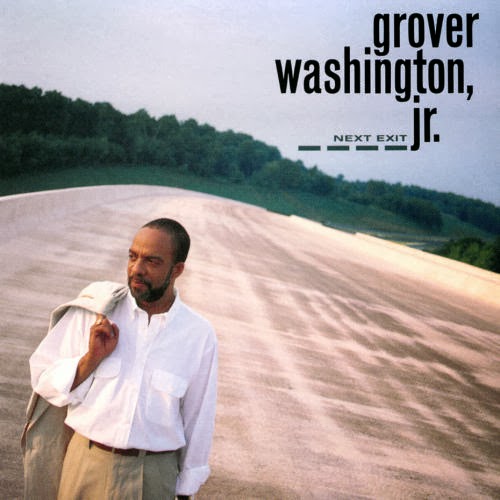
Review: Grover Washington Jnr - Next Exit

After an enviably strong and successful 1970’s that saw him creating his own distinctive brand of fusion jazz, as well as becoming a firm live and club favourite alongside his very handsome sales, Grover Washington Jr then hit the 80’s at full sprint with his ‘Winelight’ album. Refining his sound into something more lush and instantly appealing, but retaining his deep heart and soul, and laced with a rich and untoppable sense of melody, it went on to win an incredible amount of awards, as well as shift units by the ton load.

Unfortunately ‘Winelight’ also helped serve as a turn down a deadend for the great man, as he embarked on a long second phase career of trying to repeat that albums success, and slowly converting his soulful and funkily infectious fusion into what would firmly become known as smooth. ‘Come Morning’, his immediate follow-up to ‘Winelight’ was an alarmingly bland mood piece, that aimed for light and romantic but instead came up floaty and bland, sounding very polished but without possessing any real meat in the music.

After more than a decade of such similar affairs, ‘Next Exit’ in 1992 gets a slightly more contemporary boost, with some more of-the-moment production work, but essentially it’s still the same predictably standard fare of nice background music. Some mostly forgettable tunes are present, with Washington himself guilty of writing some of the largely indistinct and bloodless affairs, while Paul Desmonds classic ‘Take Five’ is also upsettingly dragged into the smooth mire.

As is typical of mostly everything Washington recorded from ‘Winelight’ onwards, he again brings in some musical friends to share the spotlight with him; this time including the special guests of legendary vocal quartet The Four Tops, and singers Nancy Wilson and Lalah Hathaway. All three are solid, though without being spectacular, whereas the numbers they perform on are essentially just a shameful waste of their great talents.

Enjoyable for the dedicated faithful of Washington’s soulful and heartfelt saxophone playing, and fans of other contemporary ‘light’ smooth music, it’s for everyone else wholly predictable and by-the-numbers. Undemanding background chill music, with absolutely no rough edges, it really won’t hold your attention, but neither will it offend the ears of any unsuspecting dinner guests for your evening soiree.

**

Tuesday, 25 February 2014

Review: Stan Getz & Joao Gilberto - The Best Of Two Worlds

More than a decade after their hugely successful collaboration classic ‘Getz/Gilberto’, tenor saxophone supremo Stan Getz and guitarist and genre creator Joao Gilberto decided in 1976 to re-unite and re-ignite the magic. Taking the winning combination of Antonio Carlos Join’s music and the musical arrangements of Oscar Carlos Neves, they were poised to conquer the world a second time.

Unfortunately for the duo, the musical world in the late-seventies was a vastly different one, with the current trends of more electric-based music in the form of disco, rock and fusion dominating. As such, on its initial release, the disc was completely over-looked and eventually largely forgotten. This though, even more unfortunately, is not some long-lost masterpiece worthy of re-evaluation and long overdue for good notices. It is instead a crushing disappointment.

Joining the two legends are a strong and eclectic band, including drummers Billy Hart and Grady Tate, bassist Steve Swallow, pianist Albert Dailey. Brazilian percussionists Airto, Ray Armando And Ruben Bassini also appear in order to add some samba colour to proceedings. Astrud Gilberto notably does not re-appear for vocal duties, largely in part due to her and Getz’s well-known affair, and so this befalls singer Heliosa Buarque de Hollanda, otherwise known as Miucha. Alongside the more than capable band, we get typically wonderful Jobim compositions such as ‘Waters Of March’ and ‘Falsa Bahiana’.

And yet, it’s a total mess. Getz, who should rightly be remembered as ‘The Sound’, possessing one of the most beautiful tones on any instrument, here is in a total slump. His sound is awful and bordering on the obnoxious, badly recorded and ultimately horrifically produced; for some reason the producer choosing to make Getz four times as loud as anybody else. Worse still is Miucha’s singing. Where Astrud Gilberto had under-sung, pretty much breathing her words, her style had fit the relaxed vibe perfectly. By strong contrast her replacement here decides some ‘free’ and off-key vocalising is the way forward. Not only does it not fit with Join’s music, but it just sounds terrible.

Ultimately, it’s the slap-dash feel that scuppers the record. With most tracks sounding under-rehearsed and most likely first takes, the afore-mentioned ‘Falsa Baiana’ cuts in loudly after a saxophone introduction and reeks of a tape cut-and-paste. ‘Eu Ven Da Bahia’ even ends with a voice clearly say “…felt good out there” before being cut off, enhancing the suspicions that whoever was behind this recording decided to do it in the quickest time possible, with minimal effort on making this a polished listening experience. All the more surprising given that this record bears the name of one of the worlds best producers and editors, Teo Macero.

Sub-par on every level, there are some relative ‘high’ points - ‘Ligia’ allows Gilberto full reign, his singing and guitar both top-rate, and the version of ‘Double Rainbow’ here being the clear highlight, benefitting from a really very good performance by Miucha. Ultimately whatever saving graces there are here, are due purely to Joao Gilberto - his beautiful guitar playing on ‘Joao Marcello’ contrasting sharply with the under-whelming poor form that Getz displays.

If you’re a fan of Bossa Nova, Getz or Gilberto, then you may be interested in this album, but truly it is the worst example of all three. ‘The Best Of Two Worlds’ was over-looked on its initial release, and frankly it’s best to leave it that way. Bearing the hallmarks of a poorly planned, badly executed and hurried recording, it’s one for die-hard collectors only, with just Gilberto stepping up, but even he is still marred by the lacklustre production. Apparently hating the results, Gilberto is best served anywhere else, and it is interesting to note that his 1973 watermark ‘Joao Gilberto’ actually contains many of the same songs here, and they are all undoubtedly of better quality. Similarly for Getz, this decade as a whole was just not a good one, whereas his work from the fifties, sixties and mid-to-late eighties is largely of the highest standard.

Most likely, given the animosity between them, recorded with Getz and Gilberto in separate studios, in as quick a time as possible, and spliced together at a later date (just as badly as the cover photos), it certainly sounds like it too. A disappointing missed opportunity, this really is one album that should be scrubbed from history.

**