Showing posts with label Four Stars. Show all posts

Wednesday, 3 September 2014

Review: Masada - Sanhedrin – 1994-1997 Unreleased Studio Recordings

Masada have hardly been a slouch in recording terms, creating ten studio works and releasing a strong fistful of live albums, with most coming from just one seven-year stretch. And yet here, you would have thought impossibly, we have an out-takes selection.

Made up of pieces taken from eight separate sessions over a four year period, ‘Sanhedrin’ actually features pieces that for the most part have been released before, but in a different take; and this being John Zorn, Dave Douglas, Greg Cohen and Joey Baron, none of the takes here sound like the perhaps more familiar versions. Rather each serves as a springboard for a very different improvisation.

And that’s where the fun lies; hearing how each of the players and the group as a whole vary in each of their solos and interactions, even though they probably only just laid down a different version only minutes before (or later).

It is in truth though not an essential Masada work, due to the partially mish-mash feel that this mix of different sessions over different times can give. It can feel like a collection of off-cuts, but does work better than one or two of the ‘official’ Masada studio albums that themselves felt like albums of scraps.

Whether this is for you depends on just how much Masada you already have and how much more you want. If you absolutely must have everything, then this is a good compilation that sits nicely alongside everything else. For anyone else it’s probably preferable to ‘Dalet’ and ‘Zayin’, the fourth and seventh studio volumes, but you would easily be better served by getting every other studio and live release by this stellar group before you invest in ‘Sanhedrin’. As a collection of its type though, its standard is very high and should not be dismissed as just a barrel-scraping exercise like many similar recordings of this ilk frequently, yet justifiably, are.

****

Tuesday, 17 June 2014

Review: Masada - Volume 10 - Yod

Exploding into life with manic fury, Masada’s tenth volume ‘Yod’ shows no sign of ending their studio catalogue run with a graceful retirement, instead choosing to play some of the most wild and free music the quartet have ever recorded. And while perhaps ‘Yod’ ranks as one of the more accessible of Masada’s works, it certainly is nowhere near an easy listen.

There’s a strong ‘go for broke’ feel to these final studio dates, but also a highly notable overt klezmer influence. Whereas before it was a sound that added to the melting pot, here instead it’s a more dominant factor, with pieces like ‘Tevel’ and ‘Zevul’ sounding almost like a traditional Jewish number filtered through free-jazz.

A darker feel too rules the album, whether on the yearning yet mournful ‘Yechida’, or the more in-your-face ‘Ruach’ that ranks as probably the most powerful number Masada have ever laid to tape. The centre of the album does possess a gentler pace than its bookends, but still maintains its distinct atmosphere, and also crucially some great solos from the front-line duo of John Zorn and Dave Douglas.

The last of Masada’s studio run, it’s a great album in its own right as well as being a good way to end the ‘songbook’. But crucially this would not be the end to Masada, with some brilliant live albums to come and Zorn reconfiguring the project in part with Bar Kokhba (and the Bar Kokhba Sextet), The Masada String Trio and Electric Masada, many of which would feature Masada alumni. Additionally Zorn would go on to write hundred more tunes for the Masada songbook under the title ‘Book Of Angels’ to be played by other musicians. All of which are very much worth investigating.

****

Tuesday, 3 June 2014

Review: Masada - Volume 9 - Tet

Masada Volume 9 is at first glance exactly what you’d expect from John Zorn, Dave Douglas, Greg Cohen and Joey Baron, with the Middle Eastern sounding Ornette quartet cooking up a brew and rising to a storm in fine style. It is though surprisingly the first real Masada effort where everyone involved gets to contribute as equal members.

It’s a two-way effect, with Cohen and Baron really pushing forward, but also with Zorn and Douglas being careful to create more space and ease off the accererator a little bit too. The effect created is that there are a significantly greater number of slower more bluesy pieces than expected – the winningly sad‘Kedushah’ being a great example, while ‘Moshav’ benefits both from being yearningly melancholich and possessing a superior opening solo from Cohen that ranks alongside his finest contributions to the quartet.

Baron plays at a new peak too, with his powerful tom-toms making a welcome return, and creating a powerful riot on the excellent ‘Meholalot’, which also gets a great Latinesque bass and drums break down. He cooks up a riot on ‘Leshem’ too, which also gets a new career highlight solo from Douglas’ trumpet.

In fact the most notable contribution here is that of Zorn, in an inverse kind of way, who creates a less dominant presence than usual. Not to say he’s not good here – he is – but the four men here create a distinctly different type of Masada than before. Not necessarily a better or worse group, but perhaps a more unified and cohesive yet moe varied one, that creates arguably one of the most unique entries in the quartets catalogue.

****

Sunday, 1 June 2014

Review: Masada - Volume 2 - Beit

After a winning debut recording with new outfit Masada, John Zorn followed up quickly with another recording from the same one-day session that generated the first volume.

And it continues to be a great musical melting pot, mixing up Jewish musical themes with avant garde jazz, creating a a fantastically unique genre of music that perhaps only a few other people if any at all have ever come close to.

Zorn plays with fire and aggression, Dave Douglas once again inspires with skill and raw power, and Joey Baron and Greg Cohen continue to supply a thundering driving rhythm that few in acoustic jazz can hope to aspire to.

‘Beit’ though does not quite reach the highs of ‘Alef’. A personal favourite group of mine, ‘Beit’ comes up just a little short compared to the debut, with an intensity that doesn’t let up and an almost bloodlust-like energy that rarely comes off the boil. However while the slight lack of variety is a downside, it really is just nit-picking on what is still a highly accomplished and viscerally exciting musical trip that you need to hear.

****

Tuesday, 27 May 2014

Review: Masada - Volume 1 - Alef

John Zorn’s Masada was originally formed by the famed saxophonist and composer for two very different reasons; one, to create a group capable of playing a collection of self-composed Hebrew-titled songs of Jewish imagery, and two, to satisfy an itch of creating a group in the style Ornette Colemans classic quartet. While it may in theory sound a disparate mix, in fact together what was created in these highly capable hands was a uniquely distinct hot and intense musical blend.

‘Alef’ is step one to what would become a highly prolific and incredibly rewarding endeavour, featuring not only Zorn on his trademark alto saxophone, but also the excellent Dave Douglas on trumpet. And even though these two great players make a winning front-line, it is the rhythm section that really powers this group with such feiry dynamism – the always strong Joey Baron on drums, and Greg Cohen on bass, that though acoustic, possesses power, thrust and groove that only few players can ever aspire to own.

‘Jair’ kicks things off explosively, perfectly fusing Coleman with Zorn’s love of punk’s immediacy and drive, while the group are careful to then show another side of their playing with the comparitvely smoother ‘Bith Aneth’ that benefits from a very different but very good Latin-esque rhythm, that does need to be heard to be understood.

The whole recording is stunning from beginning to end, showcasing thrilling drive, rewarding melody and harmony, and simply outstanding musicianship. The tunes here are varied in emotion too, taking in moving balladry, almost standard swing jazz and of course, as you’d expect from Zorn, manic musical explosions of sound. Somehow throughout it all though, from pieces of just under two minutes to those of almost ten, it maintains a distinct and unique atmosphere and tension, all its own.

John Zorn is frequently the artist that always gets dragged into the “Is he jazz?” argument. And Zorn has always quite plainly stated that he considers himself not, but jazz gigs are what he gets to be able to play and showcase his many different outlets. However in truth Masada is probably his most near-to-jazz outfit and almost certainly some of the easier music to listen to that he’s ever laid down. Everyone gets to solo, but it is a strongly cohesive showcase, and everyone shines, playing to their fullest. Simply ‘Alef’ is a great recording, but for evidence of John Zorn the horn player and musician, it’s brilliant.

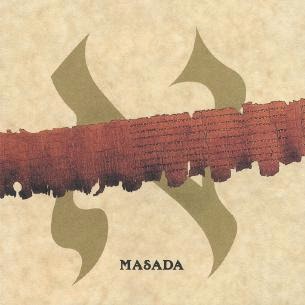
Also for those curious, ‘Alef’ is the first letter of the Hebrew alphabet – with each subsequent volume release being titled after each following letter.

****

Tuesday, 6 May 2014

Review: Bill Bruford - A Part And Yet Apart

‘A Part, And Yet Apart’ marks the recorded debut of Bill Brufords Earthworks second coming – Earthworks Version 2, if you like. Having won over the jazz world with the first incarnation of the band, Bruford briefly yet successfully helped reform rock group King Crimson for three very strong years, before deciding to re-kickstart his jazz quartet.

Whereas though the first band had heavily featured Brufords experimental electronic drumkit, the sound with this newer line-up, with its members pulled from a very strong burdgeoning London jazz scene, is focused entirely on all-acoustic music. For the most part too, the tunes here are composed by Bruford, with the exception of ‘The Emperors New Clothes’ by saxophonist Patrick Clahar and pianist Steve Hamilton.

The afore-mentioned piece is also the perkiest number here, with a tropical melody that brings to mind the marimba and other similar percussion sounds, while the title track is a clear highlight from the first beat, with its bouncing bass line courtesy of Mark Hodgson and skittish drums and flourishes from the bandleader. The sudden shift in tempo and addition of rippling arpeggios from the saxophone and piano seals the deal.

Another favourite is the scrambling rhythm of ‘Some Shiver, While He Cavorts’, whereas elsewhere we get a solid if obligatory feeling ballad in the form of ‘Sarahs Still Life’, and a nice bop in ‘Eyes On The Horizon’. Bruford though knows his audience, and knows that we want to hear a patented Bruford polyrhythmic drumming frenzy, and as such we get two such treats on ‘No Truce With The Furies’ and ‘Footloose And Fancy Free’. Here the band locks into a tight repeating riff, whilst Bruford opens up laying down a percussive volley that manages to be both highly intricate and danceable.

A solid debut for Brufords second quartet to go under the banner of Earthworks, the music and the musicianship are here in spades, and will surely go toward gaining the band a solid fanbase. A certain something seems to be missing at times, which is perhaps down to the dry production. Live, this band certainly delivers the goods, and as much as this recording may feel like a more polite version of the live experience, this is a good flavour of what they are about and showcases Brufords rhythmic flair nicely.

****

Review: John Coltrane - Meditations

John Coltrane's 'Meditations' is the strongest of his Pharoah Sanders collaborative sessions – standing as a more musical and easier to digest experience than the perhaps more famous, and certainly more daunting and out-there controversial 'Ascension' – even if oddly it has remained a slightly more 'off the radar' release.

Five pieces make up the dense tapestry of powerful spirituality and strongly resonating emotional music, with the combination of piano, bass, two saxes and two drums (courtesy of new addition to the group, Rashied Ali) creating an intensity that stretches from the start to the very end of the record.

For those familiar with 'Tranes music from '66 to '67, the sprawling live jam feel of his concerts is absent here, with nothing outstaying its welcome by going on five minutes more than is necessary, and everything feeling the right side of both tight and passionate. Also, Sanders here is arguably at his best, with his screams and wails (and screeches) fitting into the mix better than anywhere else. Here they form an enhanced and even somewhat logical part of the intended spiritual playing, whereas other later blasts from the man tended to push everything just that little too far.

The last official recorded performance by the great quartet, if an augmented one, Coltrane would never again play with McCoy Tyner or Elvin Jones, instead keeping bassist Jimmy Garrison, Sanders and Ali, and recruiting second wife Alice to fill in on the piano stool. Anyone interested in the later stage of 'Tranes musical career, or in his partnership with second tenorist Sanders, would do well to check out this fine offering, and certainly anyone willing to take the plunge into his more overtly spiritual phase would be well-recommended to start here.

****

Review: Stanley Turrentine - Don't Mess With Mister T.

Stanley Turrentines successful and re-invigorating run of soul-jazz on the CTI label continued with 1973’s ‘Don’t Mess With Mr T’. As always produced by Creed Taylor, Turrentine was again re-united with many of the labels favourites and stalwarts such as Ron Carter, Joe Farrell and Eric Gale.

Backed by a greater string presence than before, it’s an obviously more commercial record and perhaps a more accessible one too. More soul than jazz than his earlier CTI dates, it’s reflected in the choice of material as well as their arranging and playing on certain pieces. The title track that kicks off is a strong soul number which balances the embellishments of the strings well with the front line players, so that everything is audibly clear and nothing is obscured by the mix.

‘Two For T’ that follows, is much more in the jazz vein but, written by Turrentine, no less strong. The album then maintains a balanced yet heady blend of soul-jazz, in the true meaning of the phrase, with some taking just a slight more jazz slant, others an edge towards a more soul approach. Regardless, there’s not a bad track here, although ‘I Could Never (Repay Your Love)’ heads a bit too close to being an early precursor to overwrought smooth-jazz, before some sterling guitar and organ work lifts things up.

Not quite as good a record as ‘Sugar’, which contained some nicely smouldering grooves and funky solos from everyone involved, ‘Don’t Mess With Mr T’ is a fine record and definitely for anyone with an interest in Turrentine. The string work and arrangements, though sometimes pointing to the future seventies excesses that would later lead the tenor man down a dead-end avenue of schmaltz and over-reliance on sweetened disco string sections, are for the most part strong yet unintrusive. This unfortunately would be ‘The Sugar Mans’ final recording with CTI, before signing with Fantasy and ultimately releasing album after album of smooch music, and as such this is perhaps the last great Stanley Turrentine. Enjoy it.

****

Thursday, 1 May 2014

Review: Anouar Brahem - Thimar

On ‘Thimar’, Manfred Eicher’s ECM expands its umbrella of sound even further with a true east-meets-west. Anouar Brahem, the oud master, joins seasoned jazz-men John Surman, who here plays bass clarinet as well as his trademark saxes, and bassist Dave Holland, which instantly will lure many American purists to cite this as being not jazz (no blues, no swing, no standards…). Regardless there are distinctive elements of the genre here, with an abundance of originality and improvisation, both group and solo, on offer.


In truth though, it’s genuinely difficult to work out where the composition and arrangement ends, and where the improvisation starts, such is the skill and subtle spontaneity that each of trio plays with, despite the frequently complex and varied pieces. ‘Badhra’ opens with Surman’s beautifully delicate soprano, before Brahem and Holland introduce themselves slowly, showing a number of paths the record might take from there.

While for the most part uncategorizable, some of the pieces lean more toward the middle-eastern, with Brahem and Holland forming a strong unity, as Surmans sometimes mystical-sounding horns play over the top, while others have a distinctly night-time cityscape sound to them. Brahem’s native Tunisia is referenced enough without totally overwhelming the album, and each of the trio is able to solo comfortably and meditatively while the other two lock into some decidedly strong yet different rhythm, with Holland’s distinctive and richly deep sound perfectly placed everywhere on this album.

It’s remarkable that for three so unusually matched instruments, that the entire recording manages to remain so good, so welcoming, and so thoroughly absorbing throughout. Captivating in both a spiritual and musical sense, there’s a lot going on that is sure to reveal itself over repeated listens. You can’t put this in a genre, unless you want to use the catch-all phrase of ‘world’, but it is both beautiful and fresh, with a wide range and as usual brought out to their fullest by Manfred Eicher’s always pitch-perfect production.

‘Thimar’ is an impressive, and genuinely three-way, collaboration that superbly mixes the pieces of the jazz world, classical, and Arabian all into one melting point, without falling into the easy clichés that those descriptions might conjure up. Full of care, subtlety and originality, there is much to enjoy here in both the exotic and lyrical qualities that these three extraordinary performers create together. This really is a minor gem of world-fusion and is very possibly Anouar Brahem’s best work so far.

****

Sunday, 27 April 2014

Review: Hiromi - Beyond Standard

Having run out of words of praise in the English language for her outstanding career to date, four albums in of entirely self-penned compositions, and with we imagine a warehouse in Tokyo stuffed with the numerous awards for each of those four albums, Hiromi has chosen for her fifth release to be entirely made up of covers. We all knew it would come someday; a favourite performer, having made four stunning and brilliant works, and lapped up our near fanatical words of adoration, now tired from the strains of touring, decides to half-heartedly mail in the fifth album with some covers of some well-known standards.

Except, you’ve forgotten that this is Hiromi, haven’t you?

Using the same Sonicbloom band she recorded the earlier ‘Time Control’ with (electric guitar-piano-bass-drums), Hiromi here tackles not only a set of standards, but also some favourites that are distinctly non-standard. Opening with an intro taken from ‘Time Control’, the super-charged quartet launch into the Hammerstein-Romberg ‘Softly As A Morning Sunrise’, which takes on an other-worldly and enchanting quality. It is a beautiful start to the record and also highlights Hiromis modus-operandi for the following pieces.

This isn’t a tribute or homage to these standards, more a deconstruction and reconstruction. Here Hiromi is breaking the pieces down and putting them back together in a way that flavours each piece with her own distinct and quirky personality. The world doesn’t need another take on the dusty favourite ‘My Favourite Things’, so why bother? Hiromi also appears to have asked this question, and the answer appears to have been “to have some fun with it”. And that’s exactly what the band do here.

Debussys ‘Claire De Lune’ for example, is invigorating in the fresh take on the piece, moving the music from something classical in nature to something jazz. And the closing of the tune, with each of the band making individual expressions, is easily one of the album high points. Duke Ellington’s ‘Caravan’ on the other hand becomes an energetic fireball of a song, with some fluid and catchy guitar work by Fiuczynski and some simply mind-bogglingly fast rapid-fire piano solos.

Other covers here are far from standard; Japanese pop tune ‘Ue Wo Muite Aruko’ is a pleasant joy, while Jeff Becks ‘Led Boots’ and a cover of Hiromis own ‘XYZ – here re-christened ‘XYG’ allows the guitar to stretch out, whilst not pummelling the listener with the sonic overload sometimes present on the earlier Sonicbloom recording.

And of course, because this is Hiromi, things wouldn’t be complete without at least one sublimely nutty piece, equal parts inspired and insane. Like the earlier ‘Spiral’ and ‘Another Mind’, with their both spectacular and outstanding ‘Return Of Kung-Fu Champion’ and ‘The Tom And Jerry Show’ respectively, the best is kept for last. Almost a tribute, in the style of playing, ‘I’ve Got Rhythm’ is Hiromi Uehara as Oscar Peterson - a stunning six-minute solo piano that oozes fun and will raise a smile to any listener.

A superb work from beginning to end, ‘Beyond Standard’ easily lives up to its name - which in lesser hands would simply have been a prompt to goad the critics - and Hiromi continues to be a fun and engaging constantly evolving musical presence. Anyone who was put off by the addition of electric guitarist Dave Fiuczynski will be pleasantly surprised here, with his subtle and elegant more refined contributions. And Hiromi herself only gets better. One day years into the future she may choose to mail it in, but from the evidence on display here, she’d really struggle to do anything less than interesting and brilliant. Five albums in, Hiromi is five for five, and ‘Beyond Standard’ is exquisite.

****

Wednesday, 26 March 2014

Review: Stan Getz - With Guest Artist Laurindo Almeida

Stan Getz, in the early 1960’s, was displaying a truly prodigious work rate; three weeks after recording the brilliant ‘Jazz Samba Encore’, and only two days before he would record the seminal and massive commercial hit ‘Getz/Gilberto’ (that would launch Astrud Gilberto and ‘The Girl From Ipanema onto the international stage), he was recording even more bossa nova sessions.  Possibly trying to keep the momentum going or stockpile the music for future release, producer Creed Taylor was getting in as many Brazillian musicians, and sessions for them, with the golden-boy of the moment Getz. Despite the speed of production though, Taylor and Getz managed to maintain an impressively strong and consistent quality of music throughout the whole commercial bossa nova period.

Continuing the practice of recruiting one star guitarist for one session, this time Getz was partnered with Laurindo Almeida, who served as the primary composer as well as the assigned rhythm and solo foil. Also present are a mix of American players, with Steve Kuhn on piano and George Duvivier on bass, and Brazillian musicians, with Edison Machado on drums and Luis Parga and Jose Paulo on percussion.

From the second Getz and Almeida jump in with ‘Minina Moca’ the party is in full swing with music that is impossible to listen to while sitting still, and doesn’t let up. All the performances on this album are top-rank, but no-one is showing off here, the music is one of great beauty and is totally relaxed, which just adds to its immense charm. Almeida doesn’t like to improvise, so his soloing sticks rigidly to the tunes, while Jobim’s ‘Outra Vez’ is a shining example of Getz using his musical freedom for effortless lyrical charm which contrasts nicely with his partner’s more anchored playing.

‘Samba da Sahra’ is the epitome of the enduring fresh appeal of this music, full of easy strumming and soft rhythm, while Getz adds sultry heat to everything he touches. ‘Maracatu-Too’, the album closer, even manages to shift the tempo and pace up higher and end the party on a high.

Almeida had first introduced Brazillian sounds to the jazz crowd years before, most notably with Bud Shank (check out the wonderful ‘Brazilliance’), and unfortunately history has seen fit to lower his profile than he deserves. At the time, this highly passionate and electric feeling recording went unreleased, for reasons that only people familiar with marketing phrases might understand. And when it finally got a release, it was relegated to status of ‘more Getz, from the vaults’. Nothing could be further from the truth though. Many sessions like these might have been made to cash in on the boom at the time, but not only did these two masterful players help create this boom, we should be grateful to them that they did record so much stunning and desirable music.

Possibly one of Getzs’ finest bossa recordings with a hugely under-rated guitarist and composer, this is top of the league music that deserves to be sought out. Treat yourself now and find out what the world missed the first time around.

****

Review: Chris Botti - Night Sessions

Shortly after his third and final album for Verve Records, Chris Botti was invited to join Sting for a three year world tour that would eventually end in the autumn of 2001. A hugely successful tour, both financially and critically, and being allowed a generously sized solo spot every night, Botti himself was able to win over many new admirers with this new added, and very welcome, exposure.

At the start of summer in 2001, the tour took a ten week hiatus and Botti took the opportunity to rent a house in the Hollywood hills, assembling a band, some from Stings own touring band (including producer and keyboard player Kipper), with the intention of writing and recording completely new material for a fourth solo album – his debut for Columbia Records. Deciding on the direction and feel he wanted this record to take, Botti chose to work reversed hours - sleeping in the afternoon, writing in the evening, and playing and recording at night right until the sun came up.

Beginning with the languid and soulful acoustic guitar work of long-term Sting sideman Dominic Miller, ‘Lisa’ gets things off to a great start, showing the way forward for the rest of the album - a late-night album, something to listen to on balmy summer nights and take in whilst nursing a cold drink.

If ‘Lisa’ is a more smokily evocative affair, then ‘Miami Overnight’ that follows immediately after, is a more relaxed one – albeit one that perfectly carries the mood. Things then get funky with the radio-friendly sounding ‘Streets Ahead’, containing not only a winning trumpet line, but also some stellar bass work from none other than Christian McBride.

In truth, the album contains songs that fall into one of these three catagories; the smokey night time haze, the more relaxed dare I say it ‘chill’, and the more ‘up’ tracks. All of these pieces combine, in their perfectly sequenced manner, to make an album that feels very much complete – always maintaining its superb atmosphere, without ever falling too far into the chill zone.

‘When I See You’ is perhaps the track most deserving of becoming a breakout hit, featuring as it does a truly great chorus melody, something the penultimate ‘Through An Open Window’, with it funk guitars and stabbing trumpet blasts, also possesses. Perfectly counter-balancing these are pieces like the ambient ballad feel of ‘Light The Stars’ and closing number ‘Easter Parade’ with its subtle and quietly romantic light-as-a-feather trumpet line.

As well as acting as sometime employer and occasional singer for hire to Botti, Sting here donates ‘All Would Envy’ for Shawn Colvin, who in turn adds her own flavour to the song, with just a slight Brazillian twist. And unlike other vocal tracks which are often used to break up an otherwise instrumental album, this does not break up the mood or stand out awkwardly. Instead it complements the rest of the music, and enhances what goes before it and what it preceeds. Similarly, ‘You Move Me’ is a slow and languorous sensual piece that benefits greatly from Camilles seductive breathy voice that slowly moves its way from the background into the fore.

The big surprise with ‘Night Sessions’ is just how big a step up the whole album is from Bottis earlier work. The song-writing is in a much higher league than before, the production by Kipper is first-rate, but subtle, Bottis playing and tone are still as good as ever, but better utilised and melded in with his excellent backing band - most of all though, the whole album gels in a way that perhaps his first albums didn’t. Each of the twelve tracks here is a gem; there is no flab or halfway piece that should maybe never have seen the recording studio. And just as importantly the album is sequenced in a way to get the best out of each track and help provide a more complete atmosphere to the record.

‘Night Sessions’ is an excellent album, with a great sense of pace and feeling. Head and shoulders above anything he had recorded previously, it is in effect the beginning of the second wave of Bottis career – some will still regardless tag Botti as smooth, and in essence he may still be, but here he really truly shines in a way that defies that much derided genre.

****

Monday, 24 March 2014

Review: Grant Green - Solid

Grant Green recorded a truly vast number of sessions for Blue Note in the early ‘60s. So many in fact, that a good number, both as leader and as a highly-regarded sideman, were left in the vaults for many years, and not released until after his young death in ’79, and his later rediscovery by the acid-jazz crowd in the early-90s.

Of those left in the can, most in fact rank alongside his finest works, such as his two sessions recorded with the rhythm section of McCoy Tyner, Bob Cranshaw and Elvin Jones, which made the excellent ‘Matador’ and, with the additions of Joe Henderson and James Spaulding, would go on to make ‘Solid’.

‘Solid’ is perhaps the hardest sounding recording Green has ever made, not that the set itself ever becomes hard - all the players here have recorded much harder-edged material with other bandleaders. Strong material choices come from a wide range of sources, taking in the jazz world (Sonny Rollins, Joe Henderson, Duke Pearson), pop (Burt Bacharach) and Greens own always strong compositions.

‘Minor League’ sets up an upbeat opening that swings and gives us some great solos from Green and his largest ever horn section, while ‘Ess-Thetic’ will come as a strong surprise to any who would erroneously claim he possessed lesser technical skills than that of Wes Montgomery or George Benson. Elvin Jones too makes a great bid for his spotlight moment with some highly notable drumming.

The title-track and Greens own ‘Grant’s Tune’ are more blues-based, with a laid back yet good time feel, while Henderson’s frequently covered ‘The Kicker’ gets a slower paced cover than is usual, and invites favourable comparison with both Bobby Hutchersons and Horace Silvers takes on the same number. Oddly, on most re-issues of the album, Bacharach’s ‘Wives And Lovers’ is tacked on the end. It’s the exact same version that’s also on Green’s earlier ‘Matador’ sessions, and while it does sit better there, it still feels very badly out of place and tacked-on on both recordings.

‘Idle Moments’ and ‘Street Of Dreams’ come as the more well-known ‘cool’ recordings from Green, with many others coming highly recommended, such as ‘Grants First Stand’ or ‘Sunday Mornin’’. ‘Solid’ however in its different groove is a good set of harder-bopping blues-jazz, and is strongly advised for anyone who is interested in hearing Grant with a harder edge.

****

Thursday, 20 March 2014

Review: Get The Blessing - Lope And Antilope

The first thing that’s surprising about Get The Blessing’s fourth album is just how quickly it follows on the heels of career best ‘OC DC’. Not that 18 months is particularly quick, but given each of the four mens full calendars (especially the much in-demand drummer Clive Deamer), it’s impressive. The second thing to note is that ‘Lope And Antilope’ also makes a distinct difference in the groups recording process, for the first time here choosing to make an album almost entirely from improvisation over an intense four day session.

Keeping their familiar approach of Ornette Coleman style sax and trumpet playing over the top of Jim Barr’s dubby bass lines and Deamers strong rock drum attack, here they add to the sound with a greater array of electronics and effects, and again bring in Portishead alumni Adrian Utley to play some guest guitar work on a few numbers. All together this combines to create their most relaxed sounding album yet and also perhaps their most atmospheric and easily accessible.

The opening ‘Quiet’ begins tentatively with an ambient touch courtesy of Deamers light as a feather brush work, and saxophonist Jake McMurchie’s suitably restrained playing, but where it really benefits is Utley’s inspired guitar hook. ‘Little Ease’ by comparison has a more powerful rock drive, with some big sounding sax and trumpet lines, while ‘Corniche boasts some very satisfying deep bass sounds.

‘Ludoscope’ returns us to more ambient fare, only for ‘Viking Death Moped’ to come dissonately and menacingly crashing in, and ‘Hope’ is an appropriately titled hugely uplifting number, with equally big drums and some fine growling sax work. ‘Trope’ raises the ante further, and is possibly the album high point, both in mood and sound, whereas ‘Lope’ returns the group to their more familiar darker feel.

Accessibly simple, yet knottily inventive, touched by melancholy, and yet also their most optimistic work, ’Lope And Antilope’ features the group refining their sound and at the same time playing more adventurously, and being all the stronger for it. Brilliantly mixing jazz, rock, trip-hop and electronica, this is a great recording that should open up a wider audience and once more points to even greater things for the future.

****

Review: Eliane Elias - Paulistana

After proving herself a talented and unique piano voice, albeit with a sometimes frustratingly erratic output, Eliane Elias hit gold with ‘Fantasia’, a beautiful album that was received with strong critical notices and sold handsomely. And thankfully for her follow-up, ‘Paulistana’, she wisely continued in the same vein and continues on a decidedly handsome winning streak.

As before a nicely rounded mix of Brazillian composers hits from the likes of Barroso, Jobim and Bonfa are here alongside Elias’ own strong efforts peppering the mix. The opening salvo of the anthemic ‘Brazil’, Carlos Lyra’s classic ‘Influencia Do Jazz’ and Elias’ own ‘Paulistana’ alone is a huge treat, with each possessing a distinct and memorable melody.

Her favoured piano trio is the format of choice here, with Elias keen to hint at Bill Evans, as well as showcasing her own sound, with many tracks benefitting from some soulful and rhythmic percussion. On the downside, a handful of tracks also unweildily gain some of Elias’ vocals. Not to say that her voice is bad though - in fact its limited range is heightened by the warm and sensuous tone she brings to the lyrics – but its occasional lead means that her own piano playing, her greatest asset, is at times greatly reduced.

A warm and enjoyable listening experience, the recasting of these classics in a jazz format is a winning success, and Elias’ own pieces here, including the title track, are also much stronger than before, blending nicely with the well-chosen covers. And even despite the small flaws, ‘Paulistana’ is a great uplifting jazz record that sits nicely in Eliane Elias’ discography.

****

Monday, 17 March 2014

Review: Lou Donaldson - Everything I Play Is Funky

‘Everything I Play Is Funky’ is one of Lou Donaldson’s best takes on the commercial funk and soul inflected jazz of the 1970’s, that while sure to antagonise any purists of jazz scholars will easily find many admirers in the groove crowd. Relaxed and strutting, the music is carried forward with steady casual ease, and that’s what makes the session work – low on group and individual improvisation, heavy on groove.

The obligatory cover of a soul or R&B hit, which normally approaches disastrous, is carried off much stronger than usual, with the near title track ‘Everything I Do Gonna Be Funky (From Now On)’, and it makes a great opener, before being followed by a take on Lionel Hampton’s simple ‘Hamp’s Hump’ and then a melodically rich, and thankfully free of schmaltz, ‘Over The Rainbow’.

Three Donaldson originals that make up the second half of the album are where the real money is though, with ‘Donkey Walk’ laying down a driving funk and propelling everyone involved to give their best performances, especially in the solos. ‘West Indian Daddy’ carries an appropriately Caribbean vibe and a buoyant mood that sounds like everyone in the studio is having a great time, and the closing ‘Minor Bash’ sounds more jazz flavoured than the rest of the pieces here, but not too much as not to fit in with the rest.

All in all, it’s a good session, with a good mix of material and moods, with key credit going to the rhythm section of Melvin Sparks on guitar, bassist Jimmy Sparks and funk drummer maestro Idris Muhammad. Charles Earland and Lonnie Smith alternate on organ, and Blue Mitchell and Eddie Williams switch around on trumpet duties, and everyone shines, with no-one letting the side down. Lou Donaldson from 1970 onward would tend to make mostly inconsistent and disappointing records in the funk style, but ‘Everything…’ manages to be one of his very few that rise above the mire and stand on its own two feet as a much-loved soulful funk-jazz recording.

****

Thursday, 13 March 2014

Review: Kevin Figes - Circular Motion

Keving Figes has been a regular touring and recording artist for years now, both leading his own quartets, trios and bossa nova groups, and also contributing strong work to other players efforts. A well-known and highly regarded name in his native Bristol, his long-time coming debut ‘Circular Motion’ brilliantly showcases welcome evidence of a very long and enduring musical journey.

Keen to possess substance but still be accessable, ‘Circular Motion’ highlights the strong yet different backgrounds of his work – from his more free-style work recorded with Keith Tippett to his more funk-flavoured live group playing, and makes sure to show all the little pockets of his versatile musical personality.

‘Listless’ opens, with a strong and hooky saxophone melody so identifiable and memorable it could easily make radio play, and quickly became both Figes’ signature piece and a live favourite. ‘Song For Sometime’ elsewhere offers its bandleader a lovely slight-gospel ballad, and another Figes live staple ‘The Grind’ gives us a suitably swinging funk.

It isn’t just himself he provides for though. Aware of the superb musicians he has with him, plenty of space to shine is given to considerably talented local Bristol star Jim Blomfield on piano who more than gets into the complex rhythms and juicy changes in each piece (‘Sevenup’ is a highlight), and sadly serves to remind us of Blomfield’s own slim discography.

The strong self-written compositions are also given subtle but strong support by bassist Riaan Vosloo and drummer Tim Giles, while the one single cover here is the final track, a take on a piece by Figes’ much admired Wayne Shorter. ‘Lester Left Town’ originally recorded by Shorter whilst with Art Blakey’s Jazz Messengers was his tribute to the then recently passed master tenor Lester Young., and Figes own take on alto saxophone is no less moving, or inspired.

Much like his playing and writing influences of Shorter and also Dave Holland, the music here has a lightness of touch that gently holds the subtle and complex compositions underneath. The effect overall is a set of lively and widely varied yet cohesive music from a band that repeatedly deliver a stomping live show. A skilled and impassioned debut, it also achieves the valuable trick of making you want more just as it finishes.

****

Review: Freddie Hubbard - Backlash

‘Backlash’ was the first of Freddie Hubbard’s three albums for the Atlantic label, a brief interim musical period for the trumpeter, after leaving Blue Note in 1966, and before joining CTI for his soon-to-be commercial peak in 1970. And in truth it sits somewhere between the music of those two periods, his familiar style leaning much more towards his funk-inflected work of the seventies.

Funky riffs and grooves percolate the proceedings, with everything more measured than the comparatively free-form and experimental work of his later Blue Note sessions. The title track is a relaxed groover serving up some nice piano accompaniment and trumpet playing, along with ‘Little Sunflower’ and ‘Echoes Of Blue’, while ‘On The Que-Tee’ is more traditional faster-paced Hubbard fare that benefits from a brilliant standout theme. The icing on the cake though is an incredibly strong reading of ‘Up Jumped Spring’ that ranks as one of the best of anything Hubbard has ever recorded.

It’s an excellent set with a good band, with notably James Spaulding making a suitable foil for Hubbard with his alto sax and flute stylings, and Ray Barretto adding his nicely funky conga percussion throughout. For those interested in his commercial zenith work with CTI, this is a great indicator of what was to come, it being a significant stride away from his acoustic early Blue Note days. One of Hubbards sometimes more forgotten efforts, ‘Backlash’ really is actually one of his strongest.

****

Monday, 10 March 2014

Review: Get The Blessing - OC DC

Get The Blessing’s third album of course takes its name, not as some may think from a skewering of AC/DC, but from the initials of their much admired Ornette Coleman’s front line duo – Ornette Coleman and Don Cherry. And again the Bristol based quartet maintains their hard to label sound while still making it all a deliciously groove heavy recording.

The album kicks off in blistering style with the title tracks big funk-rock bass and drums rhythm, whilst the trumpet and sax, when it comes in, almost plays underneath the track instead of playing upfront. A fantastic opener, the second number ‘Americano Meccano’ by comparison is much quieter but no less impressive. Featuring a quirky guest appearance by the legendary Robert Wyatt, the piece is a melodically rich drone, but surprisingly enhanced by Wyatt’s wordless yet musical near murmuring. It’s a guest appearance that both works brilliantly, but also isn’t one that when performed live would lose something for his lack of presence.

‘Adagio In Wot Minor’ too benefits from Adrian Utley’s guest appearance on guitar effects that entwine with the two horns to form a satisfying tension, and although Pete Judge’s trumpet and Jake McMurchie’s sax are the obvious lead instruments, frequently they form a backing harmony while Jim Barr’s nimble bass work leads. Barr’s bass is a truly under-exposed musical weapon on anything he touchs; a killer groove from him is the fuel that ignites ‘Between Fear And Sex’, a wonderfully moody piece, while his insistent playing on ‘The Waiting’ creates a strong and hypnotically driving effect. The final number here too, ‘Pentopia’, is an atmospherically cinematic track that benefits from some subtle backing electronics that enhance rather than dominate. A beautiful piece it could quite happily go on forever.

‘OC DC’ is perhaps Get The Blessing’s best album so far. While Judge and McMurchie are obviously stellar musicians, and their interplay is brilliant, the real development is in bass man Barr’s presence and drummer Clive Deamer’s tight and funky perfect drumming that possesses plenty of rock bite but also features enough jazz variety and playfulness. And the foursomes interaction has in turn created one very tight unit, that when blended with the sparsely used electronics utilised here, form a uniquely sounding group with almost a genre all to themselves.

Full of bass grooves and rhythms, hard drums with plenty of snap, a two-man horn harmony and lead section, plenty of strong melodies, and every track paced to perfection, this is a great album that not only shows a growing band, but also is just a fantastic musical statement - one of the best albums of 2012.

****

Sunday, 9 March 2014

Review: Miles Davis - The Cellar Door Sessions

‘The Cellar Door Sessions’ is another in Columbias lavish Miles Davis box-set releases and, being a series of live dates from one venue as opposed to a related set of sessions or collaborations, one wonders why such a treatment. The truth is that these gigs here represent a true ‘missing link’ in Miles vast career – and how he moved from mainstream jazzer to godfather of fusion. Previously, an inadvertnt illusion was created by his ‘official’ releases that gave the strong impression that he had moved almost overnight from jazz standards to wild funk jams.

Although the slow gradual move into using electric instruments became more prominent through ‘In A Silent Way’ and ‘Bitches Brew’, it was with ‘Jack Johnson’ that everything suddenly leapt forward into the electric arena. This short-lived 1970 band shown here though was what truly marked the real shift from acoustic to electric in Miles groups. Choosing not to play any earlier Miles material, and made up of 19-year old Motown bass player Michael Henderson, drummer Jack DeJohnette, sax player Gary Bartz, jazz piano prodigy Keith Jarrett and Brazillian multi-percussionist Airto, in truth the band would not have wanted to play the earlier material.

Choosing to forsake the larger venues Miles was now playing, he instead took his newly formed band of young players to Washington D.C.’s crammed 100-people capacity club The Cellar Door. Here they would play a new, and controversial, hybrid of jazz and funk over four nights, with guitarist John McLaughlin dropping in to join the band for the final night. Portions of these performances would later be used to make up the album ‘Live-Evil’, where the cut-and-paste focus would almost be to showcase the then rising star John McLaughlin.

For years though, the band here went largely unheard, with most fans wondering what the band sounded like before the cut-ups and the heavy refocus on McLaughlin. Keith Jarrett also frequently went on record as saying that this band was truly hot, and that the final night addition of the guitarist in fact upset the rhythm, feel and tight interplay of the band. This box-set then sets the record straight, and with six complete sets and six hours of music, gives us something almost entirely previously unheard.

Each disc features a complete set consisting of between three and six tracks, with numbers frequently stretching to the fifteen minute mark (and some even to twenty). Featuring repeated versions of ‘Directions’. ‘Sanctuary’, ‘Inamorata’, ‘Honky Tonk’, ‘It’s About That Time’ and ‘What I Say’, as well as a single take on ‘Yesternow’, none of the titles here sound anything like the ones you’re familiar with.

Almost every piece here is built on a strong and repetitive bass figure that is for the most part the musics solid signpost over which everyone else lays down their groove or solo. Newboy Michael Henderson holds and drives the whole band forward, with a warm and rounded pulse, and his timing is impeccable. In fact it’s his work with Jack DeJohnette, and Airtos palette of percussion and vocals, that really transforms the sound of this band.

Gary Bartz on saxophone, who’d already worked with Art Blakey, Charles Mingus and Max Roach, was the first alto player Miles had regularly worked with since Cannonball Adderly more than ten years earlier. In truth, perhaps tenor sax here would have fared better, as Miles own trumpet playing is higher in register, and the lower sound of the tenor would have provided a much stronger contrast, but Bartz and his high-octane bluesy-sounding solos, especially his soprano work, are superb. Full of gutsy powerful playing, it’s a true shame, based on his on-display skills here, that Bartz work with Miles was so brief and little recorded.

One of the key presences, and distinctions, of this set though is the playing of Keith Jarret on the Fender Rhodes piano. Previously, Jarrett had only been heard either playing the second set of keys with Chick Corea, or largely (on ‘Live-Evil’) behind the guitar of John McLaughlin. Here though he is a solo and distinctive voice showing us compelling melodic solos and splashes of colour. It’s clear as well that Miles knew the strengths of Jarrett, as with most of the sets here he gives the piano player long improvised solo features as a bridge between the different tunes. In many ways these are like tiny previews of the acoustic concerts he would play just a few short years later. This set contains four such solos, each distinctive, with a fresh sound, and all set highlights. Tellingly, Miles never stopped praising Keith Jarret throughout the next twenty years.

And what of Miles Davis himself? On his recent albums, Miles’ critics had been quick to bemoan his use of effects on his trumpet, citing his declining chops as the reason. In fact, these criticisms were completely unfounded, as here his playing is superbly energetic and full-blooded. In this small Washington club, his playing sounds both aggressive and intimate. In fact his playing is so good, it is not overstating the point to say that this is a career high for him, in terms of range and daring. Sure, if you’re looking for the quiet and beautiful hushed playing of his 50’s days, you will be disappointed. But in every other way, this is Miles at his very best on the trumpet.

The first four discs without McLaughlin are superb. The group feels like a jazz group, but with the rhythm section (and Michael Henderson in particular) moving everything towards some gritty funk. Airto and DeJohnette are as clear as Mediterranean waters here with each of their contributions being easily seperable, and Jarrett is simply blinding. The Saturday night performances that capture McLaughlins addition to the band on discs five and six, though strong, just aren’t as good however.

As Keith Jarrett has always made clear, the band had in a very small space of time become a tight and adept unit and had acquired that valuable link between musicians that always exists in improvisational units. With McLaughlins addition, although strong, the insertion of another player into the band upsets the balance. Some superb solos are welcome, but his playing is much harder in sound than the rest of the band, and that wonderful clarity between the others tends to become overcrowded. As with the first four sets, the last two sets here are good, but how they compare to the previous four will depend on your personal preference, and ultimately your fondness for McLlaughlin.

Interestingly, Teo Macero is at the controls once again – recording the bands performances in the club. But on these occasions there is no post-session work cutting and splicing creating a collage of music, as he had done to create ‘Live-Evil’. This is 100% live music - and with excellent sound quality and clarity.

So, here it is – six complete performances recorded over four nights of powerful Miles jazz-funk, most of which you’ve never heard before. ‘Cellar’ is also easily the most sumptuously packaged of the Miles boxsets. A cherry-red case holding the CDs and extensive photos, detailed liner notes and thoughtful essays slides smoothly into a slipcase of mysterious yet highly strokeable material that feels something like a holy union between leather and suede. Sure, some will be furrowing their brow as to why they, or indeed the world, need another six-disc presentation set of Miles. Here though you have the chance to hear from front-row seats the experience of a 1970 Miles Davis club performance and that is something that no fan of Miles, heavy jazz or funk would ever want to pass up.

****