Showing posts with label Smooth Jazz. Show all posts

Thursday, 1 May 2014

Review: Grover Washington Jnr - Inside Moves

After his glorious successes with his turn-of-the-eighties album ‘Winelight’ – namely it’s enormous sales, the mega-hit with Bill Withers ‘Just The Two Of Us’ and his two Grammy awards – Grover Washington Jr then began a very long period of artistically barren yet commercially appealing recordings seemingly a million miles away from his smooth melodic urban funk work that had originally made his name.

‘Inside Moves’ from 1984 is a typical example of this, being surprisingly and overwhelmingly bad on almost all accounts. The tunes are for the vast majority dire and completely unmemorable, with an unfortunate focus on increasing the number of vocal songs, with in this case Jon Lucien performing without any notable distinction on five of the seven tracks here. The band too is equally flat, and devoid of any personality or interest, while the large ensemble of backing singers is just unpleasant, saccharine and bordering on the horrific.

It isn’t totally devoid of charm, with Washington still shooting the whole thing through with his usual heart and soul in his silky pitch-perfect playing. It’s just a shame that it’s wasted on such lacklustre material, in what is essentially his career worst album (although there are a good number of close contenders).

**

Wednesday, 26 March 2014

Review: Chris Botti - Night Sessions

Shortly after his third and final album for Verve Records, Chris Botti was invited to join Sting for a three year world tour that would eventually end in the autumn of 2001. A hugely successful tour, both financially and critically, and being allowed a generously sized solo spot every night, Botti himself was able to win over many new admirers with this new added, and very welcome, exposure.

At the start of summer in 2001, the tour took a ten week hiatus and Botti took the opportunity to rent a house in the Hollywood hills, assembling a band, some from Stings own touring band (including producer and keyboard player Kipper), with the intention of writing and recording completely new material for a fourth solo album – his debut for Columbia Records. Deciding on the direction and feel he wanted this record to take, Botti chose to work reversed hours - sleeping in the afternoon, writing in the evening, and playing and recording at night right until the sun came up.

Beginning with the languid and soulful acoustic guitar work of long-term Sting sideman Dominic Miller, ‘Lisa’ gets things off to a great start, showing the way forward for the rest of the album - a late-night album, something to listen to on balmy summer nights and take in whilst nursing a cold drink.

If ‘Lisa’ is a more smokily evocative affair, then ‘Miami Overnight’ that follows immediately after, is a more relaxed one – albeit one that perfectly carries the mood. Things then get funky with the radio-friendly sounding ‘Streets Ahead’, containing not only a winning trumpet line, but also some stellar bass work from none other than Christian McBride.

In truth, the album contains songs that fall into one of these three catagories; the smokey night time haze, the more relaxed dare I say it ‘chill’, and the more ‘up’ tracks. All of these pieces combine, in their perfectly sequenced manner, to make an album that feels very much complete – always maintaining its superb atmosphere, without ever falling too far into the chill zone.

‘When I See You’ is perhaps the track most deserving of becoming a breakout hit, featuring as it does a truly great chorus melody, something the penultimate ‘Through An Open Window’, with it funk guitars and stabbing trumpet blasts, also possesses. Perfectly counter-balancing these are pieces like the ambient ballad feel of ‘Light The Stars’ and closing number ‘Easter Parade’ with its subtle and quietly romantic light-as-a-feather trumpet line.

As well as acting as sometime employer and occasional singer for hire to Botti, Sting here donates ‘All Would Envy’ for Shawn Colvin, who in turn adds her own flavour to the song, with just a slight Brazillian twist. And unlike other vocal tracks which are often used to break up an otherwise instrumental album, this does not break up the mood or stand out awkwardly. Instead it complements the rest of the music, and enhances what goes before it and what it preceeds. Similarly, ‘You Move Me’ is a slow and languorous sensual piece that benefits greatly from Camilles seductive breathy voice that slowly moves its way from the background into the fore.

The big surprise with ‘Night Sessions’ is just how big a step up the whole album is from Bottis earlier work. The song-writing is in a much higher league than before, the production by Kipper is first-rate, but subtle, Bottis playing and tone are still as good as ever, but better utilised and melded in with his excellent backing band - most of all though, the whole album gels in a way that perhaps his first albums didn’t. Each of the twelve tracks here is a gem; there is no flab or halfway piece that should maybe never have seen the recording studio. And just as importantly the album is sequenced in a way to get the best out of each track and help provide a more complete atmosphere to the record.

‘Night Sessions’ is an excellent album, with a great sense of pace and feeling. Head and shoulders above anything he had recorded previously, it is in effect the beginning of the second wave of Bottis career – some will still regardless tag Botti as smooth, and in essence he may still be, but here he really truly shines in a way that defies that much derided genre.

****

Tuesday, 18 March 2014

Review: Stanley Turrentine - Have You Ever Seen The Rain

‘Have You Ever Seen The Rain’ is perhaps the absolute epitomy of a great jazz musician attempting commercial crossover; attempting and failing. Stanley Turrentine, who’d recorded a number of perfect artistic and commercially successful albums with the CTI label, for some unknown reason chose to leave his home of his greatest successes to join Fantasy. Immediately, with his label debut ‘Pieces Of Dreams’, the results were not pretty. His third album for Fantasy, as with that earlier record and indeed most of his mid-to-late seventies work, prominently features a full-size string section, and it’s this overwhelming presence that really scuppers the music here.

Saccharine then is the key word, with everything drowned in unpleasant gloopy-sounding strings, and with none of the material here anything but ballads. ‘Tommy’s Tune’, by Turrentines trmpet player brother Tommy is a little more of an up-tempo style ballad and, thankfully missing the strings, is unarguably the best piece, with most of the rest generally being covers of other then-current hits. The title track is of course from Creedence Clearwater Revival, with ‘You’ coming from Marlena Shaw, and Earth, Wind & Fire supplying ‘Reasons’ and ‘That’s The Way Of The World’.

Phenomenally kitsch and soft, it absolutely reeks of the label aiming for a cash-in. Maybe Turrentine really did love and just want to play ballads and only ballads, but where someone in control had aimed for romance, they instead hit cloying and over-sentimental. Most surprising of all though is just who is squandered on this travesty. Ron Carter and Jack DeJohnette, masterful players both, are here stripped of any personality – most likely in case they interfere with the strings – and Freddie Hubbard plays beautifully too, but somehow uninterestingly. Everyone else too gets to sound mostly like a jobbing sessioner, except the main man himself who very nearly acquits himself with his soulful playing.

Most likely to have a track or two end up on a compilation titled something along the lines of ‘Music For Lovers’ or ‘Candlelit Ballads For You And Your Lover’, it’s a career low for the saxophone man and deserves a seriously wide berth indeed.

*

Monday, 10 March 2014

Review: Dave Koz - At The Movies

Dave Koz sometimes gets a bit of a rum deal, often being written off as just another smooth jazzer, or much worse, as an alternative to Kenny G while you wait for him to get another release out. Blessed with a smooth tone, Dave Koz actually is smooth jazz, but crucially he plays smooth jazz with passion.

‘At The Movies’ shows nicely the passion he can bring to a project. Backed by a full-size orchestra, he also manages to snatch a strong array of interesting guest vocalists, and he plays his heart out. Barry Manilow seems an odd choice for ‘Moon River’, but he passes the grade surprisingly with flying colours, and Vanessa Williams, who really should be much bigger than she currently is, gives us a great vocal performance to rival Barbra Streisands’ more famous one.

Elsewhere Johnny Mathis and his still superb voice make a dynamic ‘Shadow Of Your Smile’, with Chris Botti too turning up to lend his gorgeous trumpet tone to proceedings. Disco star Donna Summer even convinces with what could have been a sentimental disaster on ‘A Whole New World’ (from Disney’s ‘Aladdin’).

On the downside, Anita Baker fluffs ‘Somewhere’. Not having the vocal talent needed, there’s never been a song she couldn’t oversing, but here she overdoes it completely, and what should be soaring instead comes over as over-wrought. Also, ‘Somewhere Over The Rainbow’ using a sampled Judy Garland comes over as horribly mawkish (who started this ‘collaborating with dead singers’ craze?), although Koz’s saxophone is pretty much perfect. Worst of all though, ‘It Might Be You’ sounds like India.Arie has never heard the song before and is phoning in a karaoke performance, with the words flashing up on a screen for the first time as she sings it.

Of the instrumentals ‘As Time Goes By’ and ‘Cinema Paradiso Suite’ simply swoon against Koz’s on-the-ball sax. On the other hand, ‘Schindlers List Theme’ tends to drag and the awesome ‘The Pink Panther’ just seems too cute and ultimately mis-placed.

Koz’s saxophone playing on ‘At The Movies’ is the real star. Drawing inspiration from the mostly timeless songs, he comes up with the goods which should be embraced by both his fan base and most likely also a new audience. Unfortunately not all of the song choices are great and some of the decisions made are just questionable, but those songs that do work though, work beautifully, and importantly are just great fun.

***

Saturday, 1 March 2014

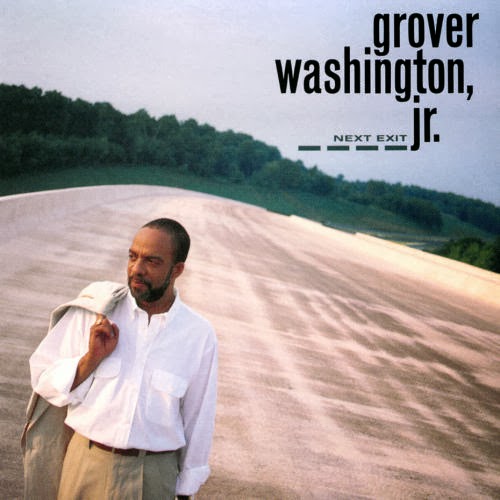
Review: Grover Washington Jnr - Next Exit

After an enviably strong and successful 1970’s that saw him creating his own distinctive brand of fusion jazz, as well as becoming a firm live and club favourite alongside his very handsome sales, Grover Washington Jr then hit the 80’s at full sprint with his ‘Winelight’ album. Refining his sound into something more lush and instantly appealing, but retaining his deep heart and soul, and laced with a rich and untoppable sense of melody, it went on to win an incredible amount of awards, as well as shift units by the ton load.

Unfortunately ‘Winelight’ also helped serve as a turn down a deadend for the great man, as he embarked on a long second phase career of trying to repeat that albums success, and slowly converting his soulful and funkily infectious fusion into what would firmly become known as smooth. ‘Come Morning’, his immediate follow-up to ‘Winelight’ was an alarmingly bland mood piece, that aimed for light and romantic but instead came up floaty and bland, sounding very polished but without possessing any real meat in the music.

After more than a decade of such similar affairs, ‘Next Exit’ in 1992 gets a slightly more contemporary boost, with some more of-the-moment production work, but essentially it’s still the same predictably standard fare of nice background music. Some mostly forgettable tunes are present, with Washington himself guilty of writing some of the largely indistinct and bloodless affairs, while Paul Desmonds classic ‘Take Five’ is also upsettingly dragged into the smooth mire.

As is typical of mostly everything Washington recorded from ‘Winelight’ onwards, he again brings in some musical friends to share the spotlight with him; this time including the special guests of legendary vocal quartet The Four Tops, and singers Nancy Wilson and Lalah Hathaway. All three are solid, though without being spectacular, whereas the numbers they perform on are essentially just a shameful waste of their great talents.

Enjoyable for the dedicated faithful of Washington’s soulful and heartfelt saxophone playing, and fans of other contemporary ‘light’ smooth music, it’s for everyone else wholly predictable and by-the-numbers. Undemanding background chill music, with absolutely no rough edges, it really won’t hold your attention, but neither will it offend the ears of any unsuspecting dinner guests for your evening soiree.

**

Sunday, 23 February 2014

Review: Chris Botti - Slowing Down The World

1999 found Botti firmly climbing the ladder for the crown of the new king of chill. Having released two well-received and high-selling albums, written and recorded a deservedly lauded soundtrack to cult film ‘Caught’, as well as toured extensively around the globe, Botti settled down to produce an album that would unashamedly, as laid out crystal clearly in his liner notes, slow things down and create the perfect mood.

From the offset, the first track, the very radio friendly ‘Irresistible Bliss’, grooves along nicely with a moody sense of cool, but without becoming too ‘smooth’. Immediately too you can hear a better stronger sound to Botti’s work. The production is more rounded, fuller even, helping plump up the bass and enhancing the rhythm sound of the record. Also assisting on a number of tracks, is a strong orchestration, provided by none other than Anne Dudley, that helps add a richer sound to the proceedings – without ever sounding saccharine or over-powering the band.

Another thing to dawn on you is that whereas ‘First Wish’ had a distinct secondary voice in its keyboards, and ‘Midnight Without You’ featured the guitar in a secondary spotlight role, ‘Slowing Down The World’ has just one instrumental voice – the trumpet of Botti. And as ever, the tone of the instrument is gorgeous.

As before, Botti has a guest vocalist on one of the pieces, this time in the form of Sting, who adds a suitably world-wearied sounding vocal line to a suitably melancholic take on ‘In The Wee Small Hours’. A perfect pairing, Sting’s singing beautifully complements Botti’s wistful trumpet playing - the only let down being the slightly limp sounding backing keyboards.

It’s unfortunate then, that one thing ‘Slowing Down The World’ has in common with ‘Midnight Without You’ is having two vocals tracks – one very much worth its inclusion on the album, and one that should really have been left off entirely. Whereas the ‘Midnight Without You’ title track though was pure blandness, a cover of Randy Newmans ‘Same Girl’ is absolutely attrocious and sits completely out of place with the rest of the album. Why is it so bad? Unfortunately, although Chris Botti has easily the most beautiful and crisp trumpet voice, his singing voice leaves much to be desired. Straining weakly against some non-descript piano the song is simply a mistake and makes you wonder who thought this was a good idea.

Luckily, the next track ‘Where I’m Calling From’ instantly more than gets things back on the groove track, and the album ends on a good note too, in the form of the most orchestrated track on the album, ‘Letting Go’.

Interestingly, despite the more overt attempt at chill-out, Botti’s third album is perhaps the most jazz sounding, in both its arrangements and Botti’s own playing. And despite the more chilled direction, the album heads more toward jazz than the previously more pop-sounding first two records. The result is that both the slower moodier tracks and the more upbeat pieces all give the feeling of simultaneously being uplifting and chilled, despite being just a little more melancholic sounding than the earlier ‘First Wish’ or Midnight Without You’.

Ultimately, where the first two Botti solo efforts sounded very alike and in many ways were perhaps interchangeable, ‘Slowing Down The World’ attempts to and succeeds in sounding different – different whilst still maintaining the Botti elements. And with some elements working better than before, and others working much worse, it is personal preference in style that will determine which you deem the better of the albums.

Much better though was just around the corner. Botti would be enlisted to join Stings touring band for almost three full years. In the middle of this tour, he would be able to get just one ten week break. This would in turn provide the right stuff needed to produce his first great album – ‘Night Sessions’.

***

Review: Chris Botti - Midnight Without You

Chris Bottis first album under his own name ‘First Wish’ had proved to be a surprise hit for the Verve record label, which wasn’t entirely surprising given both his mastery and the pure silken sound he could get from the trumpet. Coupled with his boyishly good looks and highly photogenic nature, as well as strong live reviews, Botti’s album sold itself with little marketing needed.

In between tours, Botti was asked to compose and perform the score for sultry American indie film ‘Caught’, which garnered itself excellent reviews (more so than the film) and quickly became a hard to find collectors item. Shortly afterwards Botti’s girlfriend left him.

Recorded and released in 1997, ‘Midnight Without You’ offers a ‘more of the same’ approach to the second album, but with a few surprising differences. The electric guitar for one is a welcome guest, occasionally taking a lead role, but more often adding another layer to the rhythm of the music. It is perhaps this that makes ‘Midnight Without You’ less ‘chill’ than the first album. More compelling and grabbing perhaps than the first album, it does though posess less of a cohesive flow than ‘First Wish’.

It begins in a similar manner to the first album - good then but essentially more of the same. The title track that follows though is a weak number with vocals by Paul Buchanan, who struggles to add interest to the general blandness. Easily the weakest track on the album, its inclusion so early on in the album is unfortunate.

Dumping, for the most part, the drums that made up the first album, Botti chooses to extensively use African drums, and their presence certainly raises the music here. ‘Regroovable’ for example is a big highlight that follows on immediately from the disappointment of the title cut, featuring some good funk that helps get the album back onto track perfectly. Along with the very catchy and memorable ‘Way Home’, these two tracks are easily two of the three radio friendliest hits destined to attract new admirers.

The most obvious song here though to be a break out is ‘Forgiven’. The only vocal number from the ‘Caught’ soundtrack is here given a welcome second outing, and greater exposure, as the penultimate track. Featuring superb singing from Jonatha Brooke, whose voice complements Botti’s trumpet throughout, it is a genuine wonder why this wasn’t released as a single with the film. And it makes one wish for the rest of the soundtrack to be more easily available.

The last track, ‘Alone In The City’, written after a relationship breakdown, is a strong ‘late-hours’ comedown number. Ending perhaps on a melancholic note, it is is a strong finish to an equally strong sophomore album.

***

Review: Chris Botti - First Wish

Released in 1995, without knowing the date, if you were to take a guess, it would be fairly safe to say that you would most likely guess the recording date of Chris Bottis ‘First Wish’ to within two years.

Placed firmly in the ‘chill-out’ genre, ‘First Wish’ predominantly features the rolling flat drums that strongly formed the rhythm track of numerous dance and acid jazz records throughout the early and mid-nineties. Occasionally these can become repetitive, almost soley forming a steady rhythm for the rest of the band to perform against. Surprisingly then these drums are provided by both Jerry Marotta and Steve Ferrone, acclaimed rockers who usually provide a more individual and stand-out sound – and indeed on a few tracks the dance drums are thankfully replaced by something more funky and soulful.

Drums aside, the keyboards present are just right - sparing but used to excellent effect, helping add real depth to the mix, and providing, along with Botti’s trumpet, several emotive crescendo high moments. ‘Cubism’ and ‘Like I Do Now’ also superbly keep things fresh, with the addition of Michael Breckers guest tenor saxophone and Edie Bricknells honeyed and well-suited vocals respectively. This though is Botti’s record and his is clearly the lead voice - and what a voice. His trumpet has a bright, clear and beautiful tone, and Botti’s playing is strong and emotive throughout, showcasing a good range of wistful romanticism to groovable funk.

And in truth it is Botti’s playing that definitely lifts this out of, and above, the genre known as ‘chill’. Whereas most playing in this area is strictly smooth, and mild to the extreme (Kenny G, Rick Braun) Botti injects a real passion and sensuality into his playing. Certainly the music is good to chill and relax to, but it is most definitely a rung above other music that would be tagged with these categorisations.

Listening to this release many would be drawn to asking “is it jazz?” In truth ‘First Wish’ is not jazz, tenuously it could be placed in the smooth jazz or jazz-chill genres, but Botti here has tried more to create a smooth chill pop-jazz record, albeit one with more emotional resonance. And in large part he succeeds. Whereas most chill music is simply used to provide mellow background noise, the music contained herein breaks out of the mold and showcases an at times exemplary band. Granted, the majority of the tunes here can still be used to soundtrack a funky art gallery or playout an upmarket cocktail party, but it aims to be more and it succeeds.

A good debut, it serves well to highlight its star and the beautiful soulful sound he can coax from his trumpet. Ultimately Botti would later go on to make much better and stronger recordings, which would have much stronger direction – the night-time cool of ‘Night Sessions’ and the romantic high of ‘Italia’ being particular high-points. ‘First Wish’ however showcases a great talent, a name that in 1995 would have been one to watch, and with the passing in time would have greatly rewarded any early followers. If only someone had done something about those drums…

***

Sunday, 17 November 2013

Review: Grover Washington Jnr - Winelight

‘Winelight’ is one of Grover Washington Jnr’s best-known and highest selling records, producing his smash hit ‘Just The Two Of Us’ with Bill Withers, and nominated for four Grammys, winning two – one each for the song and the album. Washington since has gone down in the history books largely as being the creator, or godfather, of the later ‘smooth jazz’ genre, and being a romance-and-wine music specialist. It’s an unfair tag and, though to a certain degree true, it belies both his extraordinary talent and his music.


His first album of the 80’s is both a classic and the absolute pinnacle of the genre, as well as transcending it, and it still sounds fresh even today. The one vocal piece is the obvious and notable standout, and as good as it is, the instrumentals are all great and in fact even better, with his skill and his heart on tenor, alto and his trademark ‘pure-toned’ soprano all really coming through.

The leading title cut is sublime and catchy, but ‘In The Name Of Love’ is the winning highlight, with a beautiful melancholy all of its own. Yes, it’ll appeal to the romantics, but it’s much more than that, with just like everything else here, coming tooled with a winning melody but also with a bite and solid foundation usually missing from most music in this area. Other ‘soft players’ like Kenny G and Richard Elliot would later bring down this style in a mire of predictable gossamer-light floating melodies backed by dated keyboards and lifeless electronic drums, but here Washington is creating something new and beautiful, just maybe pointing to something else even bigger and better around the corner.

‘Just The Two Of Us’ with Bill Withers of course is still a great song, and if tired out then only by familiarity. And Washington’s incredible solo is inspired, as indeed they always had been. In fact there isn’t a weak track at all on this classic album. Granted, this isn’t the grittier funk of Washingtons earlier ‘70’s albums, and as the cover shows, it’s clearly aimed with one firmly arched-eyebrow and a teeth-clenched red rose at the candlelit valentines crowd. As such then it’s a very smooth listen, but also with some real meat to sink your teeth into. Longtime collaborator Eric Gale is a welcome presence throughout too, playing some sophisticated and restrained guitar to match up with Washingtons pristine sax work.

If there is anything expressly bad about this record, it’s the slightly dated 80’s percussion on a couple of the tracks here, that in hindsight would be better omitted from the mix entirely, that and Marcus Millers sometimes overly ‘springy’ bass. As good a player as he is, and he is good, his bass tone in this decade was always incredibly plastic and processed sounding, and unfortunately the same is largely true here also. Those tiny quibbles aside, this is fine silk-like music from beginning to end, that would admittedly later regrettably lead to the creation of ‘smooth’ as we now know it. Featuring many a good solo from some inspired players and truly a great saxophone player, it really is one of Washingtons best albums.

*****

Wednesday, 21 August 2013

Review: Grover Washington Jnr - Aria


Grover Washington Jnr, the huge star of jazz-funk fusion at its prime, and creator of the original smooth jazz, passed away suddenly and unexpectedly just a few short days after his 56th birthday in 1999, with an only-just recently finished new album in the can and ready to go.

Turning a new corner Washington, having been a student and a lifleong lover of classical music as well as possessing a unique and definite voice on both the soprano and tenor saxophones, chose to fulfil a long-standing personal dream by recording a number of famous pieces by some of the defining classical greats, all in his own inimitable style.

And while it’s probably a bit of an eyebrow raiser for fans of either Washington or the compositions themselves, there is much to love, including plenty of the much-loved saxophonist showing his richly melodic flair on not just his trademark soprano and tenor, but also on the alto and baritone saxes

The majority of the album is made up of famous pieces by the opera composer Puccini, but some golden nuggets are also present from the likes of Bizet, Gershwin, Massenet and Giordano. The highlight though is the beautiful and iconic ‘Flower Duet’ aria from Leo Delibes ‘Lakme’, which manages to maintain the intense and emotional pull associated with the usually vocal duet piece.

Washington is more than ably assisted throughout too by bassist extraordinair Ron Carter and pianist Billy Childs, with the Orchestra of Saint Lukes adding lush backing everywhere and occasionally even being allowed to shine under the spotlight instead of acting merely as a supporting cast.

Overall though, it’s not one of Grover Washingtons most daring, exciting or entirely successful efforts, with the lack of groove or beat obviously likely to turn any of his more casual fans away. And while some of the classical compositions work strongly in Washingtons silky and soulful arrangements, not all of them do so well, with a good few meandering and others drowning in cloying strings and over-production (a trademark of many later Washington recordings), and veering dangerously close to a smooth-jazz schmaltzy take on the classics (‘My Mans Gone Now’ is particularly treacily and guilty of this).

It toes the line then between beautiful re-interpretation and alternatively a very unattractive ‘contemporary’ and lightweight re-imagining, but crucially just like pretty much everything the great man played and recorded, it’s full of his golden sound, and it’s bursting with his heart and soul, that truly shines through on everything here. And after a good few years of some pretty by-the-numbers efforts, it’s good to hear the great man playing with both greater feeling and stronger material. ‘Aria’ is far from essential but, definitely worth a listen, it’s easily his best in well over a decade.

***